
Understanding stuttering
When to worry about stuttering, and whether it will go away
How to tell stuttering from ordinary stumbles, what research can and cannot predict about a child growing out of it,...
Stuttering speech therapy with Dr Lauren Crumlish (PhD), Certified Practising Speech Pathologist. Every session is by video (telehealth), Australia wide, for children and teenagers up to 18.
A parent or guardian applies.

Start With Your Child's Age
Speech therapy for stuttering, which some families and reports call stammering, is not the same at 3 as it is at 13. The treatment with the best evidence, and how Dr Lauren works with your child, both change with age.

Wait Or Act
Some children do stop stuttering without treatment, but nobody can tell in advance which children will. Australian stuttering researchers advise starting treatment soon after stuttering begins, so asking for an assessment is a reasonable step and not an overreaction.

How It Works
Five steps, the same for every family. What happens inside them depends on your child's age.
A parent or guardian fills in the application. Our team will review it. A place is not guaranteed.
Every family starts with an initial assessment. It looks at your child's stuttering and its history, and ends with a recommendation.
Dr Lauren sets the goals and the plan. For children under 6 that is usually the Lidcombe Program. For school-aged children and teenagers she works with your child directly, following what research supports at that age.
Dr Lauren runs regular sessions, typically weekly, measures progress and adjusts the plan. In between, younger children do a short practice each day with a parent, as she has shown you. Teenagers do their own practice.
In the Lidcombe Program, sessions are weekly at first. Once stuttering has stayed very low for several weeks, Dr Lauren decides when sessions become less frequent and withdraws the program gradually while your child's speech holds.

For Children Under 6
The Lidcombe Program is a stuttering treatment developed in Australia for children younger than 6. Dr Lauren uses it with young children who stutter. She sees your child in regular sessions, typically weekly, where she measures the stuttering, sets the goals for the week and decides when to move on. In between, a parent does a short practice each day and praises smooth talk, in the way Dr Lauren has shown them and checks each week. Read the Lidcombe Program, step by step for the full walk-through.
Developed for children younger than 6, and suitable for some older children
Led by Dr Lauren in regular sessions, with a short daily practice she shows you
Children are not asked to change the way they talk
Its evidence base is confirmed by 11 independent reviews
Why By Video
Dr Lauren runs every session by video: she assesses your child's talking, checks progress against the week before and decides what comes next, with your child playing and talking at home with their own toys and books. She shows you the short daily practice step by step and checks it each week. The Lidcombe Program's treatment guide reports clinical trials showing the program is effective when the speech pathologist's part is given by video. See how stuttering therapy works by video for the detail.















Your Clinician
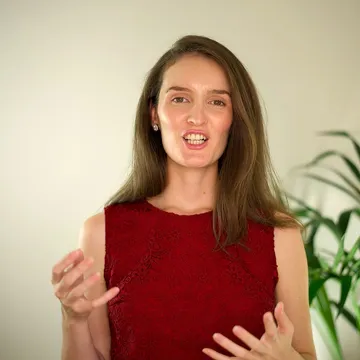
Dr Lauren Crumlish is a Certified Practising Speech Pathologist with a PhD from The University of Queensland. She treats stuttering in children and teenagers and uses the Lidcombe Program. Dr Lauren is a speech pathologist, not a medical doctor. She works with a small number of families and has limited availability. Read more about Dr Lauren and her published research.
Fees
Sessions are $193. The first step is an initial assessment, from $590. Medicare rebates are available with a doctor's referral. The practice is not NDIS registered: self-managed and plan-managed participants are welcome; NDIA-managed funding cannot be used.
Therapy
One hour of service: 45 minutes of therapy and 15 minutes of preparation and notes
$193
Initial assessments
$590
The shortest of the three initial assessments
$890
A longer initial assessment
$1,290
The most comprehensive initial assessment
A session is one hour of service: 45 minutes of therapy and 15 minutes of preparation and notes. Private health rebates may apply, depending on your fund and cover. See fees and Medicare for stuttering therapy for the detail.
Guides For Parents
Plain, sourced guides on stuttering in children and teenagers.
See All GuidesUnderstanding stuttering
How to tell stuttering from ordinary stumbles, what research can and cannot predict about a child growing out of it,...
Understanding stuttering
Nothing a parent did causes stuttering. Here is what research supports as causes, what only makes stuttering show more on...
Home and school
What to say when your child gets stuck on a word, when a brother or sister teases and when a...
Home and school
A note to the teacher you can copy, adjustments for roll call, reading aloud and oral assessment, what to do...
Treatment
The Lidcombe Program, RESTART-DCM, Palin PCI, syllable-timed speech and the Camperdown Program in one table, with an honest answer on...
Treatment
The short daily practice the speech pathologist shows a parent in the Lidcombe Program: the five kinds of feedback in...
Frequently Asked Questions
Yes. A young child is not asked to sit and work at a screen. Dr Lauren watches your child talk and play, measures the stuttering, shows you the short daily practice and decides the next step, all on the call. The Lidcombe Program treatment guide reports clinical trials showing the program is effective when the speech pathologist's part is given by video.
No. You do not need a referral to apply for stuttering therapy. A doctor's referral is only needed if you want to claim a Medicare rebate.
Some children do. The Australian Stuttering Research Centre says many but not all children recover naturally, sometimes up to three years after stuttering starts, and that it is not possible to predict whether an individual child will. That is why researchers advise starting treatment early instead of waiting to see.
Nobody can say in advance for one child. For the Lidcombe Program, the Australian Stuttering Research Centre says it is common for children to take several months to reach no stuttering or almost no stuttering. A second stage follows, with less frequent sessions, to check that the change holds.
No. Dr Lauren works with children and teenagers up to 18.
No. Every session is by video, for families anywhere in Australia.
Dr Lauren works with a small number of families and has limited availability. Our team will review your application. A place is not guaranteed.













Work With Dr Lauren
Dr Lauren works with a small number of families and has limited availability. A parent or guardian applies.
Apply Now