
Treatment
Stuttering treatment for children and teenagers: what the evidence supports
The Lidcombe Program, RESTART-DCM, Palin PCI, syllable-timed speech and the Camperdown Program in one table, with an honest answer on...
Stuttering Therapy By Video
Online stuttering therapy is speech pathology for stuttering held by video call, with the family at home. For children under 6 it has been tested against sessions in a clinic, with no evidence of a difference in stuttering. Dr Lauren Crumlish (PhD) works with children and teenagers who stutter by video only, Australia wide.
The short answer
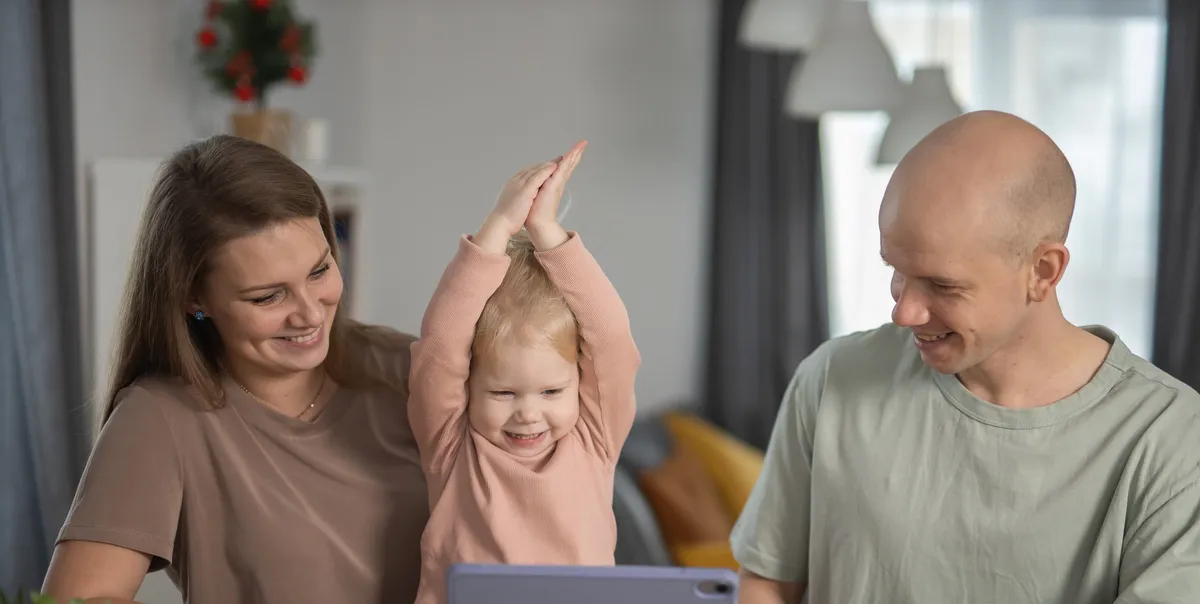
For young children, yes, on the evidence of a randomised trial. Forty-nine children aged 3 to 5 did the Lidcombe Program either by webcam or in a clinic, and nine months later there was no evidence of a difference in stuttering between the two groups.
For school-aged children and teenagers the telehealth studies are smaller and had no comparison group. They show that treatment by video can reduce stuttering at these ages, and that results vary more from one child to the next.

Before The First Session
Online stuttering therapy needs very little equipment. Most of this list can be done tonight, before a first session.
A laptop or tablet with a camera and microphone, propped up so your hands are free
A quiet room with the door shut and the television off
The camera at your child's eye level, with you and your child both in the picture
For a young child: two or three books or simple games they already like, within reach
A parent or carer beside a child for the whole session (for a teenager, who is in the room is agreed at the start)
A short recording of your child talking at home that week, in case they go quiet on camera
A charged device, set up in the spot where your internet is strongest
| Study | Who took part | How treatment was given | What it found | Its limits |
|---|---|---|---|---|
| Lewis and others, 2008 | Preschool children | The Lidcombe Program, taught to parents at home by telephone, compared with no treatment | Stuttering was 73% lower than in the untreated group at nine months | Telephone only, with no video. It took about three times the resources of clinic treatment |
| Bridgman and others, 2016 | 49 children aged 3 to 5 | The Lidcombe Program by webcam, compared with the same program in a clinic | No evidence of a difference in stuttering at nine months, in parents' severity ratings, or in how parents rated the relationship with the speech pathologist | One trial. No evidence of a difference is not proof that the two are identical |
| Carey and others, 2014 | 16 teenagers | The Camperdown Program by webcam, with no clinic visits | 14 finished. Average stuttering fell from 6.1% to 2.8% of syllables, measured 12 months after the maintenance stage began | No comparison group. It worked well for about half, and half showed little change in avoiding speaking situations |
| Johnson and others, 2024 | 37 children aged 6 to 12 | The Lidcombe Program, with parents taught by video | 12 children (32%) reached the program's Stage 2 criteria within 12 months. At six months most of the others showed a partial response and five showed none | No comparison group. The authors call for randomised trials |
The telehealth evidence for stuttering therapy is strongest before age 6 and thinner after it, which matches the evidence for stuttering treatment in general. No trial covers every program, every age or every child, and none is a promise about one family's result.
Stuttering treatment for a young child suits video because everything the speech pathologist does in a Lidcombe Program session can be seen and heard on a call. She listens to the child talk, measures the stuttering, watches the short daily practice, shows any change she wants made and sets the plan for the week. A young child only needs to play and talk.
Video also puts the session in the room where the practice happens, with the child's own books and toys, so what Dr Lauren shows you is already set up for home. The full program is set out in the Lidcombe Program, step by step.
At 3. A 3 year old is not asked to sit and work at a screen. Under the Lidcombe treatment guide the child chats or plays for a few minutes so the speech pathologist can hear and rate their talking, she watches a short practice session, and she uses the rest of the session to review the week, show the parent any change and set the plan. The guide describes the child's part as joining in and having fun. A recording from home can stand in if a child will not talk on camera. More on this age: stuttering in toddlers and preschoolers.
At 9. For a 9 year old the choice of treatment is less settled. The Australian Stuttering Research Centre says the programs used with younger children may be adapted, or programs used with teenagers may be. In the 2024 trial with 6 to 12 year olds, the Lidcombe Program was run by video with a parent taking part. That trial also measured anxiety and how children felt about talking, because by this age those matter alongside the stuttering itself. More on this age: stuttering in school-aged children.
At 15. A teenager works with the speech pathologist directly. In the 2014 webcam trial, teenagers learned a way of speaking that reduces stuttering, first slowly and then at a natural-sounding rate, and practised it between sessions. The Australian Stuttering Research Centre notes that teenagers tend to like video because they already use devices every day. More on this age: stuttering in teenagers.
With school-aged children and teenagers, Dr Lauren works with the child directly. Which approach she uses is set in the plan that follows the stuttering assessment.
Online stuttering therapy is not the right choice for every family. Look for a speech pathologist who works in person if any of these apply.
Speech Pathology Australia's Find a Speech Pathologist search lists Certified Practising Speech Pathologists and can be filtered to stuttering. Where a teenager's main difficulty is anxiety about speaking, a psychologist is the right person for that part. The Australian Stuttering Research Centre names cognitive behaviour therapy as the treatment of choice for social anxiety.
Dr Lauren Crumlish holds a PhD from The University of Queensland and is a Certified Practising Speech Pathologist. She treats stuttering in children and teenagers and uses the Lidcombe Program. Dr Lauren is a speech pathologist, not a medical doctor.
Dr Lauren works with a small number of families and has limited availability. Read more about Dr Lauren Crumlish, or Apply Now.
How It Works
Online stuttering therapy with Dr Lauren follows the same path for every family, and none of it needs travel.
A parent or guardian fills in the application form. Dr Lauren works with a small number of families and has limited availability.
The first step is an initial assessment of your child's stuttering, held on a video call with a parent present.
For a child under 6 the usual starting point is the Lidcombe Program. For older children and teenagers the approach is set out in the plan.
Dr Lauren runs regular sessions by video, typically weekly, measures progress and adjusts the plan. With a young child, she shows you a short daily practice for home and checks it each week.
Fees
Sessions are $193. The first step is an initial assessment, from $590. Medicare rebates are available with a doctor's referral. The practice is not NDIS registered: self-managed and plan-managed participants are welcome; NDIA-managed funding cannot be used.
Therapy
One hour of service: 45 minutes of therapy and 15 minutes of preparation and notes
$193
Initial assessments
$590
The shortest of the three initial assessments
$890
A longer initial assessment
$1,290
The most comprehensive initial assessment
Fees are the same for every family, wherever in Australia they live. A session is one hour of service: 45 minutes of therapy by video and 15 minutes of preparation and notes. Private health rebates may apply. See full pricing

Questions Parents Ask
Online speech therapy for stuttering has trial support, strongest for young children. A randomised trial of 49 children aged 3 to 5 found no evidence of a difference in stuttering between the Lidcombe Program by webcam and in a clinic. Studies with school-aged children and teenagers are smaller and show more varied results.
Yes, because a 3 year old is not expected to sit and work at a screen. On a call, a young child talks or plays for a few minutes while the speech pathologist listens and rates their talking. She then reviews the week, shows the parent the short daily practice and sets the plan.
A telehealth session for stuttering needs a laptop or tablet with a camera and microphone, a steady internet connection and a quiet room. For a young child, add a parent or carer beside them and a few favourite books or simple games. No special equipment or software has to be bought.
Yes. The Lidcombe Program's treatment guide lists video telehealth beside clinic visits as a standard way to hold the weekly session, and the program has been tested by webcam in a randomised trial. Dr Lauren uses the Lidcombe Program by video.
Online stuttering therapy can suit teenagers, with mixed results in research. In a trial of 16 teenagers treated by webcam with no clinic visits, average stuttering fell by more than half, but the treatment worked well for only about half of the group. A teenager works with the speech pathologist directly.
No. Stammering and stuttering are two words for the same thing, and online speech therapy for stammering is the same treatment. Stammering is the more common word in the United Kingdom, and stuttering is the word used in Australia.
No. Dr Lauren works with children and teenagers up to 18. An adult who stutters can search for a speech pathologist through Speech Pathology Australia, choosing stuttering as the area of practice.
Online stuttering therapy sessions with Dr Lauren Crumlish are $193. The first step is an initial assessment, from $590. Medicare rebates are available with a doctor's referral, and private health rebates may apply.
No. Every session with Dr Lauren is by video, which is how families anywhere in Australia can work with her. A family who wants in-person sessions should look for a speech pathologist close to home.












Work With Dr Lauren
Dr Lauren works with a small number of families and has limited availability. A parent or guardian applies.
Apply Now